Six Little Cards and a Pushpin: The Corkboard That Outlived the Internet
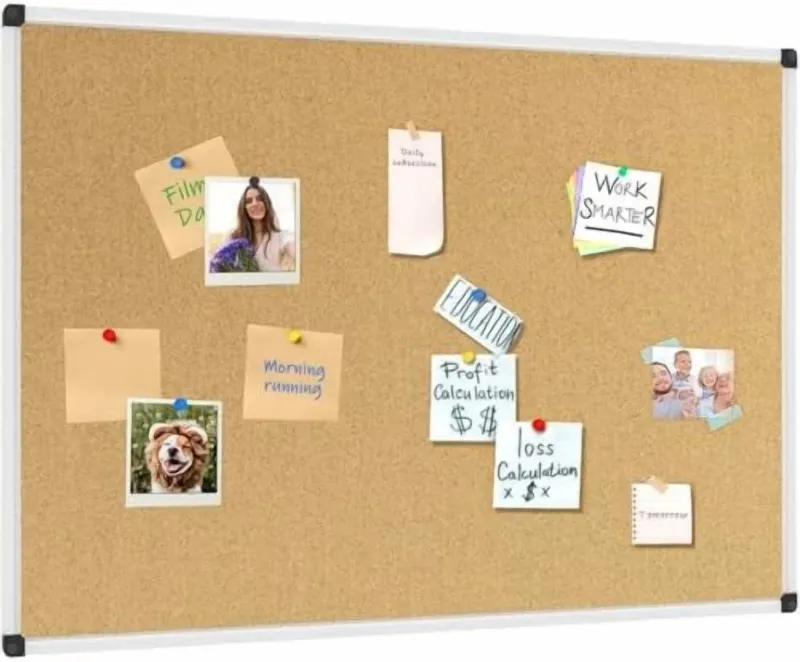
Photo: grocery store corkboard bulletin board flyers tear-off tabs, via i5.walmartimages.com
Between the customer service desk and the shopping carts at the Kroger on East Main, there's a corkboard. It's been there, in one form or another, since at least the Clinton administration. Right now it holds: a card for guitar lessons ($20/half hour, "patient with beginners"), a flyer for a lost orange tabby named Dorito, a babysitting offer from a woman named Kayla who lists three references, and a handwritten note that just says "FREE PALLETS. YOU HAUL."
This board has outlived Napster, MySpace, Vine, and roughly four rounds of social media apps promising to "connect your neighborhood." Nobody's monetizing it. Nobody's algorithm is boosting it. And yet every week, cards disappear — which means somebody took them, which means the board worked.
Why won't this thing die? We asked around. Here's what the pin-and-pull faithful told us.
1. The Card Is the Commitment
Printing a flyer costs money. Writing out a card by hand costs time. Either way, posting to the corkboard requires leaving your house, standing in a grocery store, and physically pinning your intentions to a wall where everyone in town can see them.
Compare that to posting on an app, where the barrier to entry is roughly zero and the credibility is roughly the same. "When someone takes the trouble to put a card up," Kayla the babysitter told us, "you figure they're not a bot. Probably."
Probably is doing real work there, but it's more trust than a stranger's five-star profile earns.
2. Lost Cats Don't Have Email Addresses
Dorito the orange tabby has no phone, no inbox, and no Nextdoor account. His person's options are limited: the physical board catches the exact audience that matters — people who live close enough to be looking.
The lost-pet flyer is the bulletin board's core franchise, and it's easy to see why. It's hyperlocal in a way no geo-targeted ad can match. The person who finds Dorito will find him within a half mile of this Kroger. The board knows that. The algorithm doesn't.
3. It Screens for Realness
Several board users mentioned a version of the same idea: the corkboard filters for people who actually exist in your physical vicinity and are willing to be perceived. A guitar teacher who posts a card with a phone number and a name is, by definition, findable. You can call, meet at the library, and check whether "patient with beginners" is true.
Digital platforms promised to solve trust with ratings. The corkboard solves it with geography and a paper trail — the paper trail being, you know, paper.
4. No Login, No Ads, No Feed
The board has no terms of service. It doesn't require you to accept cookies or confirm you're 13 or older. There's no engagement metric, no reason to post something inflammatory, and no sponsored content wedged between the pallets and the piano lessons.
One retiree who was there to post a card for a yard sale put it plainly: "It's the last place where the information is just... there. Nobody's trying to keep you scrolling."
5. The Board Is Also a Mirror
Here's the thing nobody mentions: half the value of the bulletin board isn't the cards you take. It's the cards you read. Standing in front of one is a snapshot of what a neighborhood needs right now — help moving a couch, a drum kit for sale, a church rummage sale, a math tutor.
Your feed shows you what the whole internet is mad about. The corkboard shows you what your zip code is missing. Those are very different documents, and only one of them tells you how to be a good neighbor this week.
6. Anyone Can Post
No smartphone, no problem. No English, no problem — half the boards we saw had cards in two languages. No credit card, no subscription tier, no "boost your post for $5." The teenager giving drum lessons and the 80-year-old selling her late husband's tools stand on exactly equal footing: one pushpin each.
Every platform that promised to democratize community eventually built a paywall. The corkboard never did.
Keep Pinning
Libraries and laundromats, take note: the board is infrastructure. It costs almost nothing to maintain and it quietly holds together a web of small transactions — lessons, sales, rescues, favors — that make a neighborhood function.
So next time you pass one, stop. Read a few cards. Take the guitar teacher's number even if you don't play. And if you've got something to offer — a service, a skill, a free pallet — print the card, bring the pushpin, and add your little rectangle of paper to the oldest social network in town.