Cash Box, Card Table, Community: What the Garage Sale Knows About Us
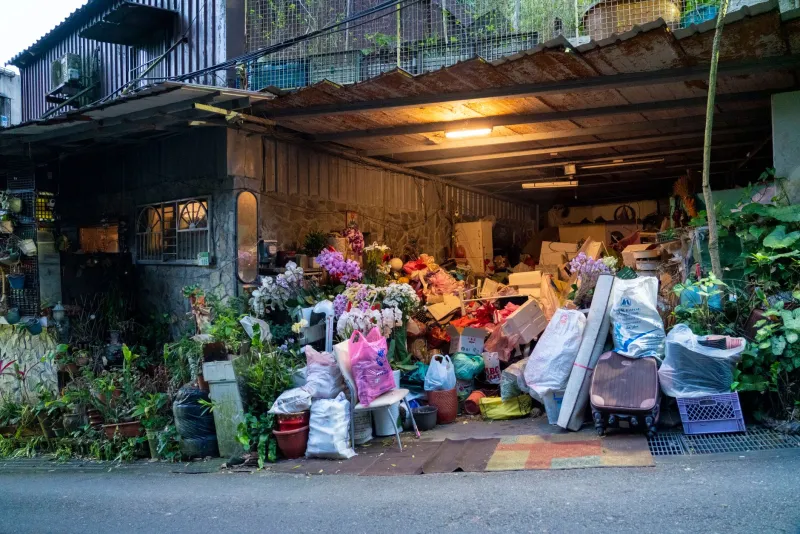
Consider what's actually happening on a random April Saturday in a random American subdivision. A card table wobbles on the driveway, holding a bread machine, three board games missing their dice, and a fondue set from 1974. A hand-lettered sign says EVERYTHING MUST GO. A cash box — an actual box, with actual cash — sits unattended while the owner chats with a stranger about knee surgery.
Nothing about this is efficient. Nothing about it scales. And that's precisely why it matters.
The Economy of Almost Nothing
The garage sale operates on a pricing logic that would bankrupt any retailer: items are marked at whatever number feels right, then negotiated down anyway. A $3 lamp becomes $2 becomes 'just take it, you're doing me a favor.' Economists would call this irrational. Participants call it Tuesday.
But watch closely and you'll see the real transaction. The haggling isn't adversarial — it's the ritual. Both parties need the dance to justify the sale. Paying full price at a garage sale is somehow ruder than offering a lowball. The negotiation is how strangers confirm they're both playing the same game, on the same terms, with the same gentle understanding that none of this really matters and all of it matters completely.
A Cast of Characters You Won't Find on Any App
Every sale has its regulars. There's the early bird who arrives before the posted start time, apologizing while not apologizing. The reseller, phone out, checking comps on a vintage jacket with the focus of a day trader. The historian — every neighborhood has one — who picks up a rotary phone and narrates where it came from, who had one, what the world was like when a phone was furniture.
And there are the kids, running a lemonade stand beside a dead lawnmower, learning the entire curriculum of commerce in one morning: inventory, marketing, the crushing weight of overhead when your little brother drinks the product.
You cannot replicate this cast on a marketplace app. Online, you sell an item to a username. At a garage sale, you sell it to a person who tells you, unprompted, that her mother had the exact same gravy boat, and for thirty seconds you are both somewhere else entirely.
The Most Democratic Institution Left
Here's the argument, and I'll make it plainly: the garage sale is among the last genuinely democratic spaces in American life. Entry is free. Participation requires no account, subscription, or background check. The rich person's driveway and the renter's driveway operate under identical rules. Prices are set by conversation, not algorithms. And the marketplace's governing document is a piece of poster board with marker on it.
It's also one of the few remaining places where the full lifecycle of objects is publicly acknowledged. Things were loved, then weren't, then get handed to someone who might love them again. In an economy built to make us discard and rebuy on schedule, the garage sale is a quiet act of refusal — a belief that objects carry stories worth passing along in person.
Go This Weekend
Community sale season peaks in spring and fall, and the rules of engagement are simple. Bring small bills. Ask about the story behind anything weird — that's where the good ones are. haggle kindly. And if a kid is selling lemonade next to a lawnmower that will never run again, buy the lemonade. You're not just getting a drink. You're underwriting a civics education, one paper cup at a time.