Nobody's Watching You Garden, and That's the Whole Point
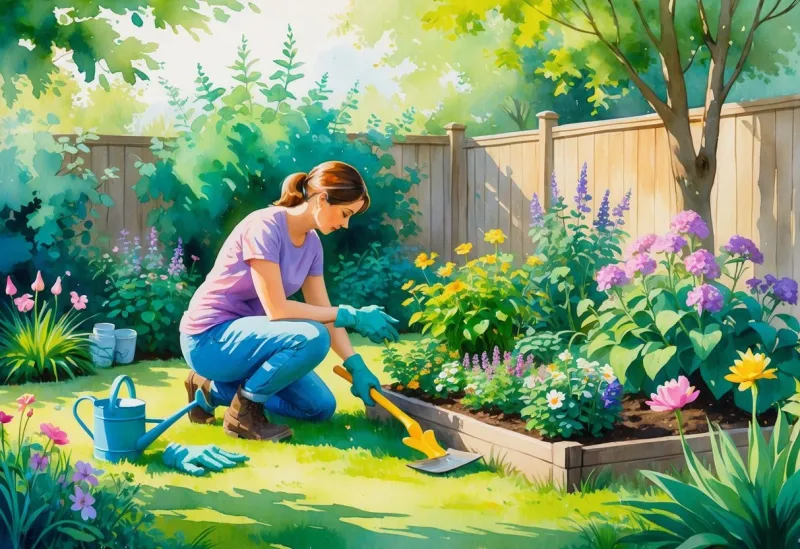
Photo: person gardening alone in backyard relaxed casual hobby, via freshhobby.com
Somewhere between the third failed attempt at sourdough and the fifth time someone suggested you "open an Etsy," a lot of us quietly decided to stop. Not stop baking — stop performing baking. Stop treating every loaf like a content opportunity. Stop measuring the value of a Saturday afternoon by whether it produced something worth posting.
That quiet decision? It's more radical than it sounds.
We live in a culture that has figured out how to extract value from literally everything you enjoy. Knitting becomes a monetizable skill. Bird-watching becomes a YouTube channel. Your backyard tomatoes become the hook for a newsletter about slow living. The machine is patient and thorough, and it has made a lot of us feel like merely doing something — without optimizing, documenting, or eventually selling it — is somehow a waste.
But a growing number of people are pushing back, not loudly, not with manifestos, but with something more stubborn: they're just doing their thing, badly or adequately, in private, and refusing to make it mean more than it does.
The Tyranny of the Side Hustle
It's worth naming the pressure directly, because it's everywhere. The past decade or so of American hustle culture didn't just glamorize overwork — it colonized leisure. Hobbies stopped being rest and started being unpaid internships for your future personal brand. If you were good at something, you were supposed to monetize it. If you weren't good at it yet, you were supposed to document the journey toward getting good. Either way, your free time owed someone a deliverable.
The result, for a lot of people, was the slow death of casual enjoyment. Things that used to feel like play started to feel like auditions. And when you're auditioning, you're not really present — you're performing. You're thinking about lighting and angles and whether this moment is "content" instead of just living inside it.
There's a real cost to that. Researchers who study leisure and well-being have consistently found that intrinsic motivation — doing something because it genuinely feels good — is way more restorative than extrinsic motivation, like clout or cash. The second you start doing something for an audience, even a hypothetical one, you change your relationship to it. You're no longer resting. You're working for free.
What Mediocrity Actually Feels Like
Here's what nobody tells you about being reliably, contentedly mediocre at something: it's deeply, weirdly peaceful.
Take amateur gardening. Not the aspirational kind with heirloom varieties and perfectly labeled raised beds. Just — someone who grows some tomatoes, loses half of them to pests, learns one new thing a season, and finds the whole process genuinely satisfying without needing it to be more than that. There's no arc there. No growth trajectory. No brand. Just a person and some dirt and the particular pleasure of watching something live.
Or bird-watching. Not the competitive life-list kind, though there's nothing wrong with that. Just someone who put a feeder outside their apartment window in Cleveland and now knows the difference between a house finch and a purple finch and feels quietly pleased about it. They're not going to write a field guide. They're probably never going to join a club. They're just a person who knows a thing and finds that enough.
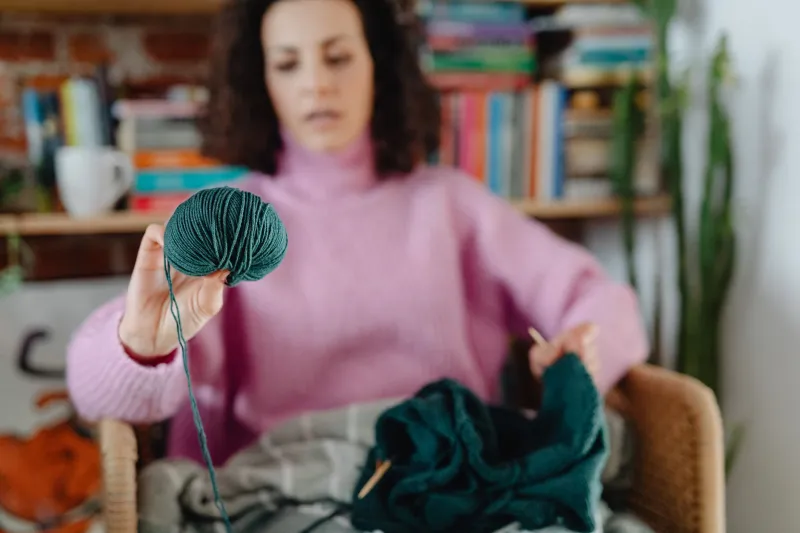
Knitting is another one. Millions of Americans knit badly and happily, producing lumpy scarves and slightly-off dishcloths that they give to people who love them anyway. The Ravelry forums are full of projects that took eighteen months and turned out kind of wrong, and the people posting them are not ashamed. They're proud. Not of the object — of the time. Of the sitting-still. Of the thing their hands did while their brain got a break.
This is the texture of a hobby that hasn't been optimized. It's a little rough. It doesn't have a pitch deck. And it is genuinely, honestly restorative in a way that a monetized version of the same activity almost never is.
The Community Angle Nobody's Selling
Here's something interesting: a lot of the most durable community spaces in American life are built around exactly these kinds of unglamorous, unspectacular pursuits.
Community gardens aren't cool. They're often a little chaotic, governed by handwritten sign-up sheets and passive-aggressive notes about whose turn it is to water. But they are, consistently, places where neighbors who would never otherwise meet end up knowing each other's names, sharing extra zucchini, learning which kid belongs to which apartment. The hobby is the excuse. The community is the point.
Same goes for the knitting circles that meet at public libraries. The amateur birding groups that do free walks through city parks. The neighborhood cooking clubs where nobody's a chef and the food is inconsistent and everyone comes back anyway. These aren't optimized experiences. They don't have apps. They're just people doing a thing together, slowly, without expectation, and finding that the doing-together is what sticks.
This is something The Common Thread keeps coming back to: culture isn't built in the viral moments. It's built in the repeated, ordinary ones. The Tuesday night thing. The annual bad cookie exchange. The neighbor who always has opinions about your tomato plants. These are the threads that actually hold neighborhoods together, and almost none of them are impressive enough to document.
The Radical Act of Enough
There's a political dimension here worth sitting with. Choosing to be enough — not exceptional, not monetizable, not optimized — is a quiet refusal of a set of values that has done a lot of damage. The idea that your worth is tied to your productivity, that your leisure should be legible as self-improvement, that everything you touch should have ROI — these aren't neutral cultural assumptions. They're a specific ideology, and opting out of it, even in small ways, matters.
It matters for your mental health. It matters for your relationships. And it matters for the kind of community you're able to build, because communities built around performance and aspiration are fragile. Communities built around showing up, muddling through, and being okay with the lumpy scarf — those tend to last.
So: keep the hobby that nobody's impressed by. Stay bad at the thing you love. Grow the tomatoes, lose the tomatoes, plant more tomatoes next spring. Let your bird list be embarrassingly short. Knit the dishcloth. Cook the dinner that doesn't photograph well but tastes like something.
Nobody's watching. That's not a problem. That might be exactly the point.