The Joy of Doing Things Badly (And Not Selling It Afterward)
Marcos learned to throw pottery during the pandemic. He is, by his own enthusiastic admission, not good at it. His bowls list slightly to the left. His mugs have handles that feel vaguely threatening. He has given away approximately forty pieces to family members who display them with the specific energy of people who love you unconditionally.
He has no Etsy shop. He has no Instagram dedicated to his work. He does not describe himself as a "ceramicist." He drives forty minutes to a community studio every other Saturday, pays his membership fee, and makes lopsided bowls for the pure, uncomplicated pleasure of making lopsided bowls.
"Someone asked me once if I was going to sell them," he says, laughing. "And I realized I'd never even considered it. That felt like the whole point."
The Decade We Spent Monetizing Everything
Somewhere in the 2010s, American culture got very serious about the idea that passion and profit should be the same thing. The hustle economy didn't just change how we worked—it changed how we thought about leisure. Hobbies stopped being things you did and started being things you leveraged.
The advice was everywhere, delivered with the cheerful urgency of a productivity influencer who definitely does not sleep: Turn your passion into your paycheck. Build your personal brand. If you're good at something, monetize it. If you're not good at something yet, document the journey—that's content too.
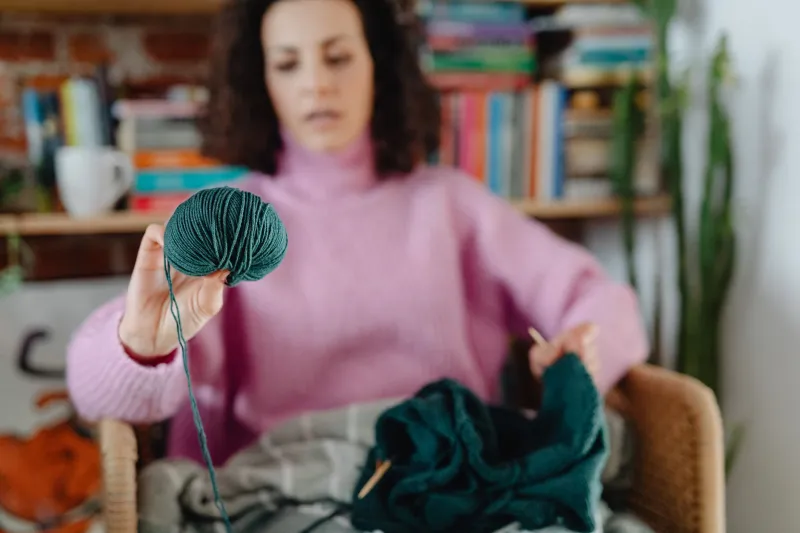
For a while, it worked on a lot of us. We started baking sourdough and immediately wondered if we should start a bread account. We picked up watercolors and checked Skillshare to see if we could teach. We knitted one scarf and someone said "you should sell these" and for a brief, seductive moment, we believed them.
The problem wasn't ambition. Ambition is fine. The problem was the creeping sense that any activity without a monetization pathway was somehow incomplete—a hobby that didn't pay wasn't a real hobby, just a failed business.
The Quiet Rebellion
Something has been shifting. Slowly, without a manifesto or a hashtag campaign, people are pushing back.
You can see it in the communities that have formed around doing things just because. Tabletop gaming groups that meet in library basements with no streaming ambitions whatsoever. Knitting circles where the explicit vibe is that nobody's yarn budget needs to be justified to anyone. Collectors of strange, specific things—vintage lunchboxes, regional fast food memorabilia, Soviet-era lapel pins—who trade knowledge and finds with zero interest in flipping their haul for profit.
Jamila runs a book club in Chicago that has met monthly for six years. They have never had a social media presence. They have never considered it. "We read books and argue about them and someone always brings too much wine," she says. "That's the whole thing. That's enough."
It is, in fact, more than enough. But for a while, our culture made people feel like they needed to apologize for that.
Why This Matters Beyond the Individual
Here's where it gets interesting, and here's why this isn't just a lifestyle piece about self-care: the shift away from monetized hobbies is also a shift in how people relate to each other.
When a hobby becomes a business, it changes the relationship you have with the people around it. The knitting circle where you're all just making things becomes complicated when one person starts selling and another doesn't. The pottery class gets weird when someone's building a brand. The game night develops an edge when content creation enters the room.
Hobbies that exist purely for joy tend to be more communal. You're not competing. You're not protecting intellectual property or worrying about market positioning. You're just there, doing the thing, with other people who are doing the thing. That's an older model of leisure—one that's actually quite good at building the kind of low-pressure, high-trust social bonds that communities need.
The tabletop gaming renaissance, for instance, is remarkable not just for the number of people playing games but for the way they're playing them: in person, in groups, often in spaces like local game shops that have become genuine third places. The game is the excuse. The connection is the point.
On Being Bad at Things, Specifically
There's another dimension here that doesn't get enough credit: the value of doing something you're not good at.
The optimization culture that pushed us to monetize also pushed us to perform competence. If you're going to put something out into the world—a product, a piece of content, a skill—it needs to be good enough to sell. That standard, applied to leisure, is quietly suffocating.
Most people will never be great at most things. That's just math. And the insistence that hobbies should be productizable effectively told a lot of people that their imperfect, joyful, lopsided-bowl-making selves weren't worth the effort.
But there's deep value in doing something badly and doing it anyway. Struggling with a skill teaches patience and humility in ways that competence doesn't. The person who plays guitar poorly for thirty years just because they love it has gotten something real from that guitar, even if they never played a show. The runner who finishes every 5K last is still a runner.
When we removed the possibility of monetization as a goal, we accidentally gave people permission to be beginners again—to be in the middle of something, imperfect and unjustified and alive.
The Cultural Stakes
At The Common Thread, we think a lot about what holds communities together—what creates the shared experiences and mutual recognition that make a group of people into something more than strangers with a zip code in common.
Hobbies, it turns out, have always done some of that work. The bowling leagues and church choirs and amateur theater productions that defined mid-century American social life weren't just pastimes. They were infrastructure. They were the places where the accountant and the mechanic and the schoolteacher found themselves in the same room, working toward the same impractical goal, building relationships that crossed the lines that divided them elsewhere.
When we turned hobbies into side hustles, we didn't just change our relationship to leisure. We stripped away one of the mechanisms by which people with different lives find common ground.
The people reclaiming their hobbies as purely personal, purely joyful, and stubbornly non-commercial are doing something that looks small but isn't. They're refusing to let every human activity be mediated by the market. They're insisting that some things exist just because they're good, or fun, or meaningful to the people doing them.
Marcos still makes his lopsided bowls. His sister keeps one on her kitchen counter. It holds her keys.
That's a pretty good use for a bowl.