From 'Understood the Assignment' to Actual Friendships: How Meme Culture Is Quietly Rebuilding Community
The Handshake You Didn't Know You Were Learning
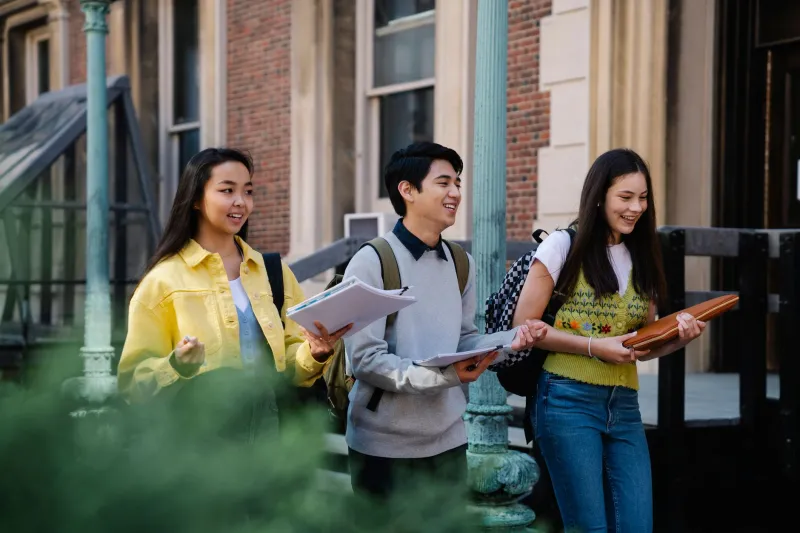
It happens fast. You're standing in line at your campus dining hall, and the person behind you mutters something under their breath — a half-ironic reference to a sound you've heard approximately four hundred times on your For You Page. You turn around. Eye contact. A knowing smirk. And just like that, two strangers have found common ground without exchanging a single conventional pleasantry.
This is the new social currency, and it's more valuable than most people over thirty are willing to admit.
Across the country, young people are using the shared vocabulary of TikTok, Instagram Reels, and Discord servers to bridge the gap between screen-time and face-to-face connection. What looks like mindless scrolling from the outside is actually, for many Gen Z and Gen Alpha participants, a kind of cultural education — one that pays dividends the moment they walk out the door.
"It's like learning a second language," says Destiny, 20, a sophomore at Howard University in Washington, D.C. "When someone references the same niche thing you've been watching, it immediately tells you something real about who they are. You skip all the boring small talk and go straight to the stuff that actually matters."
More Than Just a Laugh
Let's be clear about something: this isn't just about jokes. The memes, the catchphrases, the trending audio clips — they're a delivery mechanism for something much older and more fundamental. Shared humor has always been one of the fastest ways humans establish trust. What's changed is the speed and scale at which that shared culture is now being manufactured and distributed.
A sound goes viral on a Tuesday. By Friday, it's being referenced in dining halls from Boise to Baltimore. By the following Monday, two people who had never met are laughing together in a coffee shop in Austin, Texas, and making plans to grab lunch next week.
Jordan, 17, a high school junior from suburban Chicago, describes showing up to his first robotics club meeting last fall feeling like an outsider. "I didn't know anyone. But then this one kid made a reference to a really specific meme — like, not even a popular one, more of a niche corner-of-the-internet thing — and I just lost it. That was it. We've been friends ever since."
That niche quality matters a lot, actually. The more specific the reference, the stronger the signal. It's the difference between recognizing a pop song on the radio and discovering someone who owns the same obscure vinyl record you've been hunting for years.
When Digital Culture Walks Off the Screen
What's particularly striking — and what deserves way more attention than it gets — is how this phenomenon is feeding into real-world organizing and collective action.
Several youth-led community groups have credited their early momentum to exactly this kind of internet-forged solidarity. In Philadelphia, a mutual aid network that started among a cluster of Gen Z neighbors traces its origins back to a group chat that began when two people bonded over a shared obsession with a particular content creator who was openly discussing food insecurity. The jokes came first. The community organizing followed.
"We always say the meme was the door and the mutual aid was the room," laughs Priya, 22, one of the network's founding members. "It sounds ridiculous, but it's genuinely how it worked. The shared culture gave us a reason to talk, and once we were talking, we realized we actually cared about the same things."
This pattern — digital affinity translating into analog action — is showing up in unexpected places. Campus activist groups, neighborhood clean-up crews, zine collectives, local music scenes. The common thread (and yes, we see the irony) is that the initial connection almost always traces back to some corner of the internet.
The Critics Have a Point — But Only a Small One
None of this is to say the relationship between social media and real-world community is uncomplicated. It isn't. Platforms are designed to keep eyeballs on screens, not to send people out the door to meet their neighbors. The same algorithm that introduces you to your future best friend is also, let's be honest, engineered to keep you doom-scrolling at 2 a.m. instead of sleeping.
And there's a real conversation to be had about who gets included in this cultural shorthand and who gets left out. Not everyone has equal access to the same platforms, the same devices, or the same bandwidth — literally and figuratively. Internet culture can be just as exclusionary as any other kind of in-group signaling, and it would be naive to pretend otherwise.
But here's the thing: every generation has had its version of this. Slang, music, fashion, sports references — these have always been the social tools young people use to find their tribe. What's different now is that the tribe can form across zip codes and time zones before it ever meets in person. That's not nothing. That's actually kind of remarkable.
A New Kind of Common Language
Ask any college resident assistant and they'll tell you the same thing: the students who seem to connect fastest aren't necessarily the ones who grew up in the same town or share the same major. They're the ones who speak the same internet dialect.
"I've watched friendships form in ten minutes because of a shared reference," says Marcus, 24, an RA at a state university in Ohio. "And those friendships tend to stick, because they're based on something authentic — like, you both genuinely found the same weird thing funny. That's a real foundation."
At The Common Thread, we've always believed that community doesn't require a formal invitation or a neighborhood newsletter. Sometimes it requires nothing more than two people recognizing the same signal in a noisy world and choosing to stop and acknowledge it.
The TikTok generation didn't invent the inside joke. They just scaled it up, sped it up, and — maybe most importantly — showed up for each other on the other side of the screen.
That's worth paying attention to.