The Lived-In Home: Why Young Americans Are Finally Letting Their Apartments Be Ugly
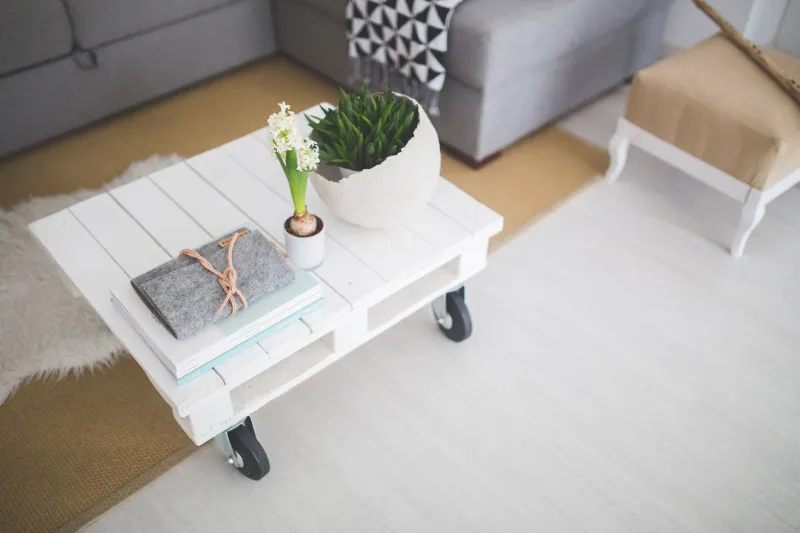
There is a specific kind of exhaustion that comes from rearranging the same shelf for the fourth time trying to make it look like a lifestyle. You know the one. You've got a candle, a small plant that's doing okay, and a book you want people to think you've read. You step back. You take a photo. The photo doesn't look right. You move the candle.
At some point — and this point is arriving for a lot of people right now — you just put the candle wherever and go sit on your couch.
That's it. That's the movement.
The Aesthetic Apartment Was Always Kind of a Fiction
For roughly a decade, the visual language of "home" in America got thoroughly colonized by a particular look: neutral tones, intentional textures, everything matching or artfully mismatched in a way that still somehow looked coordinated. Open shelving with ceramics arranged just so. A gallery wall that took three weekends and a level. Houseplants thriving under grow lights in every corner.
The look wasn't bad, exactly. Some of it was genuinely beautiful. But it was also, for most people, a performance — a version of domestic life optimized for the camera rather than for the actual humans living there.
And it was expensive. Not just in money, though that too. It was expensive in time, in mental energy, in the ongoing low-grade anxiety of living in a space that always felt slightly unfinished relative to some imaginary ideal.
Now, something is shifting. You can feel it in the way people talk about their homes — less apologetically, with more of a shrug. "It's kind of a mess but it's cozy" has replaced "I'm still working on it" as the dominant mode of domestic self-description. And that's not a small thing.
What People Are Actually Saying
Talk to people in their 20s and 30s about their living spaces and you start hearing a consistent theme: a deliberate withdrawal from the pressure to perform domesticity for an audience.
Simone, 31, renting a one-bedroom in Atlanta, put it directly: "I spent two years trying to make my apartment look like it was in a magazine. I bought things I didn't need because they looked good in photos. Now I have a couch I actually love, a coffee table with water rings on it, and a pile of shoes by the door that I refuse to hide. It's the most comfortable my home has ever been."
Kevin, 26, in Minneapolis, described a similar turning point: "I had this whole vision for my place and then I just never had the money or the time to execute it. At first that felt like failure. Then I realized my apartment is actually fine. It has everything I need. The fact that it doesn't look like a showroom doesn't mean anything."
What both of them are describing isn't resignation. It's something closer to a deliberate recalibration — a decision to stop measuring their homes against a standard that was always external to begin with.
The Algorithm Gave Us Someone Else's Living Room
It's worth being clear about where the pressure came from. The aspirational home aesthetic didn't emerge from some organic cultural consensus about what living spaces should look like. It was, in large part, produced and distributed by platforms that profit from aspiration — from the gap between where you are and where you could be if you just bought the right thing.
Scroll through Instagram or TikTok for twenty minutes and you'll see a very specific version of domestic life: abundant, organized, photogenic, complete. What you won't see is the closet those things came out of, or the credit card balance, or the fact that the person living there moved the laundry basket out of frame before shooting.
When your reference point for "normal" is algorithmically curated to showcase the most aesthetically maximized version of other people's homes, your own actual home starts to feel deficient. That's not an accident. That's a business model.
The people opting out of that cycle aren't just making a decorating choice. They're making a political one, in the small-p sense of the word. They're deciding that their private space doesn't owe anything to public consumption.
Ugly, Actually, Is Doing a Lot of Work
Here's the reframe worth sitting with: what gets called "ugly" in this context is usually just honest. The mismatched furniture that came from different phases of your life. The art on the wall that has personal meaning rather than visual coherence. The functional lamp from Target next to the vintage end table you got at an estate sale. The desk that's clearly where you actually work, not a styled vignette of productivity.
These things tell the truth about how someone actually lives. And there's a real intimacy in that — both for the person living there and for anyone they invite in.
There's a reason a certain kind of home feels immediately comfortable the moment you walk in. It's not because everything matches. It's because you can tell someone actually lives there. The indentations in the couch cushions, the stack of mail that hasn't been dealt with, the collection of mugs that outnumbers the available cabinet space. These are signs of a life in progress, not a life being staged.
Reclaiming the Private Room
Something important happens when you stop designing your home for an imaginary audience. The space starts working for you instead of the other way around.
You put things where they're actually useful rather than where they photograph well. You keep the ugly but beloved blanket your grandmother made even though it clashes with everything. You let the bookshelf be genuinely chaotic because that's how you actually find things. You stop buying storage solutions for stuff you should probably just throw away.
The home becomes, maybe for the first time, actually private. A place that belongs to you rather than to the performance of you.
That's not a small thing in a culture that has spent years eroding the line between public and private, between lived experience and content. Choosing to have a home that doesn't need to be seen — that exists purely for the people in it — is a quiet but meaningful act of reclamation.
The water rings on the coffee table can stay.