Some Things Aren't for the Feed: The Quiet Power of Keeping a Secret Love
The Refusal Nobody's Talking About
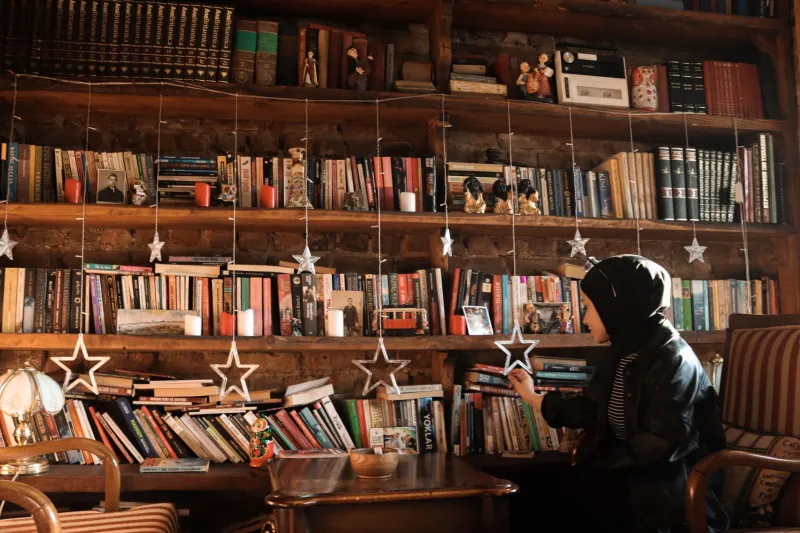
Marcus has been going to the same independent bookstore in Columbus every other Saturday for six years. He has a running tab, a favorite chair in the back corner, and a relationship with the owner that has survived two recessions and a pandemic. He has never once posted about it.
This isn't because he's embarrassed. He's not. It's because, as he puts it, "the second I post about it, it stops being mine."
Marcus is not alone in this. Quietly, without any particular manifesto or movement, a meaningful number of Americans have started drawing invisible lines around the things they love most — keeping them deliberately, almost stubbornly, off social media. Not everything. Not even most things. Just certain things. The ones that matter too much to risk.
The Economics of Exposure
To understand why some people are opting out, you have to understand what happens when you opt in.
Posting about something you love sets off a chain of events that's hard to stop once it starts. You get feedback — likes, comments, shares. That feedback shapes how you relate to the thing. You start to notice what version of your interest performs well and what doesn't. You start framing your experience in terms of how it will read. And eventually, almost without noticing it, you're no longer just loving the thing. You're managing it.
This is not a new observation, but it keeps being true. The attention economy doesn't just monetize content. It restructures the emotional relationship between people and their interests. When your passion becomes content, it starts to follow content's rules.
For some people, that trade-off is fine. For others, it's quietly devastating.
What the Holdouts Are Protecting
Spend time talking to people who deliberately keep their interests offline and a few patterns emerge.
First, there's the question of contamination. Diane, a middle school teacher in Albuquerque, has been into competitive jigsaw puzzling for three years. "I know it sounds ridiculous," she says, "but it's the one thing I do that has absolutely nothing to do with how I look to other people. The second I put it online, I'd start buying prettier puzzles. I'd start caring about the aesthetic. I'd ruin it."
Then there's the community question. Several people mentioned that their offline interests had connected them to small, specific communities — a local hiking group, a Tuesday-night knitting circle, a low-key tabletop gaming crew — and that broadcasting those interests online felt like an invitation to scale something that worked precisely because it was small.
"My book club has eight people in it," says Priya, a logistics coordinator in Atlanta. "We've been meeting for four years. I don't talk about it online because I don't want it to become a thing. I don't want to have to manage people's expectations about it. It just... is what it is, and that's enough."
And finally, there's the purity argument — the one that's hardest to articulate but keeps coming up. Some things feel sacred in proportion to how private they are. The specialness is inseparable from the secrecy.
The Subtle Pressure to Perform Your Interests
What makes the holdout position genuinely countercultural isn't the choice itself — it's the pressure they're resisting.
We live in a moment where having an interest you don't share online can feel almost antisocial. How do people know you're into something if you don't post about it? How do you find your community? How do you signal who you are?
These are real questions, and they come with real social weight. There's an implicit assumption baked into contemporary culture that authenticity and visibility are the same thing — that sharing is how you prove you care, and not sharing is a kind of withholding.
The people who resist this framing aren't necessarily anti-social. Many of them are deeply communal. They just locate their community differently — in physical spaces, in small groups, in relationships that don't require a platform.
"I have plenty of people to talk to about the things I love," says Marcus. "I just talk to them in person. I don't need the internet to validate my interests."
What We Lose When Everything Becomes Content
There's a loss on the other side of this, too, and it's worth naming.
When people keep their genuine enthusiasms offline, those enthusiasms become invisible to the broader culture. The weird, niche, particular things that make people who they are don't circulate. The internet gets a slightly more flattened, slightly more legible version of human taste — the stuff that performs well, the stuff that scales, the stuff that fits.
The things that don't translate to content don't disappear, but they stop shaping the conversation. And conversations shaped only by what performs well tend to get narrower over time.
This is where the community dimension comes in. The Common Thread exists, in part, on the premise that everyday voices matter — that the texture of ordinary life, with all its specificity and weirdness, is worth preserving and celebrating. But that texture only shows up in culture if people are willing to surface it. The holdouts are protecting something real. They're also, maybe, keeping it from the rest of us.
The Case for Both
Maybe the answer isn't to post everything or to post nothing. Maybe it's to make deliberate choices about which parts of yourself you offer up and which parts you keep.
Having something that's purely yours — that exists outside of the feedback loop, that doesn't need to perform or scale or attract — isn't a failure of community. It might actually be what makes genuine community possible. You can't give what you don't have. You can't share an authentic self if you've turned every piece of it into content.
Marcus still goes to the bookstore every other Saturday. He still sits in the corner chair. He still doesn't post about it.
And somehow, that feels like the most radical thing in this article.